Cart
0
Kyo-Nui (Kyoto Embroidery)
Kyo-Nui (Kyoto Embroidery) is one of Japan's finest traditional embroidery arts, with a history spanning more than 1,200 years. It developed in Kyoto, the cultural heart of Japan, where skilled artisans created exquisite embroidery for the imperial court, temples, shrines, Noh costumes, and the luxurious kimono and obi worn by nobility.
Unlike machine embroidery, every stitch in Kyo-Nui is sewn entirely by hand using silk threads, gold leaf threads, silver leaf threads, and other specialty materials. The embroidery is known for its exceptional precision, graceful shading, rich textures, and remarkable three-dimensional beauty. Master artisans carefully select different stitching techniques to create lifelike flowers, birds, landscapes, and traditional Japanese motifs.
Many of the gold and silver threads used in Kyo-Nui are produced by Kyoto Nishijin craftsmen using traditional techniques that have been passed down for generations. These precious threads give the embroidery its distinctive brilliance and elegance.
Today, authentic Kyo-Nui remains a highly respected traditional craft. Because each piece requires countless hours—or even months—of meticulous handwork, genuine Kyoto embroidery is increasingly rare and highly valued by collectors, textile artists, and kimono enthusiasts around the world.
Kyo-Nui represents not only extraordinary craftsmanship but also the timeless beauty and cultural heritage of Japan.

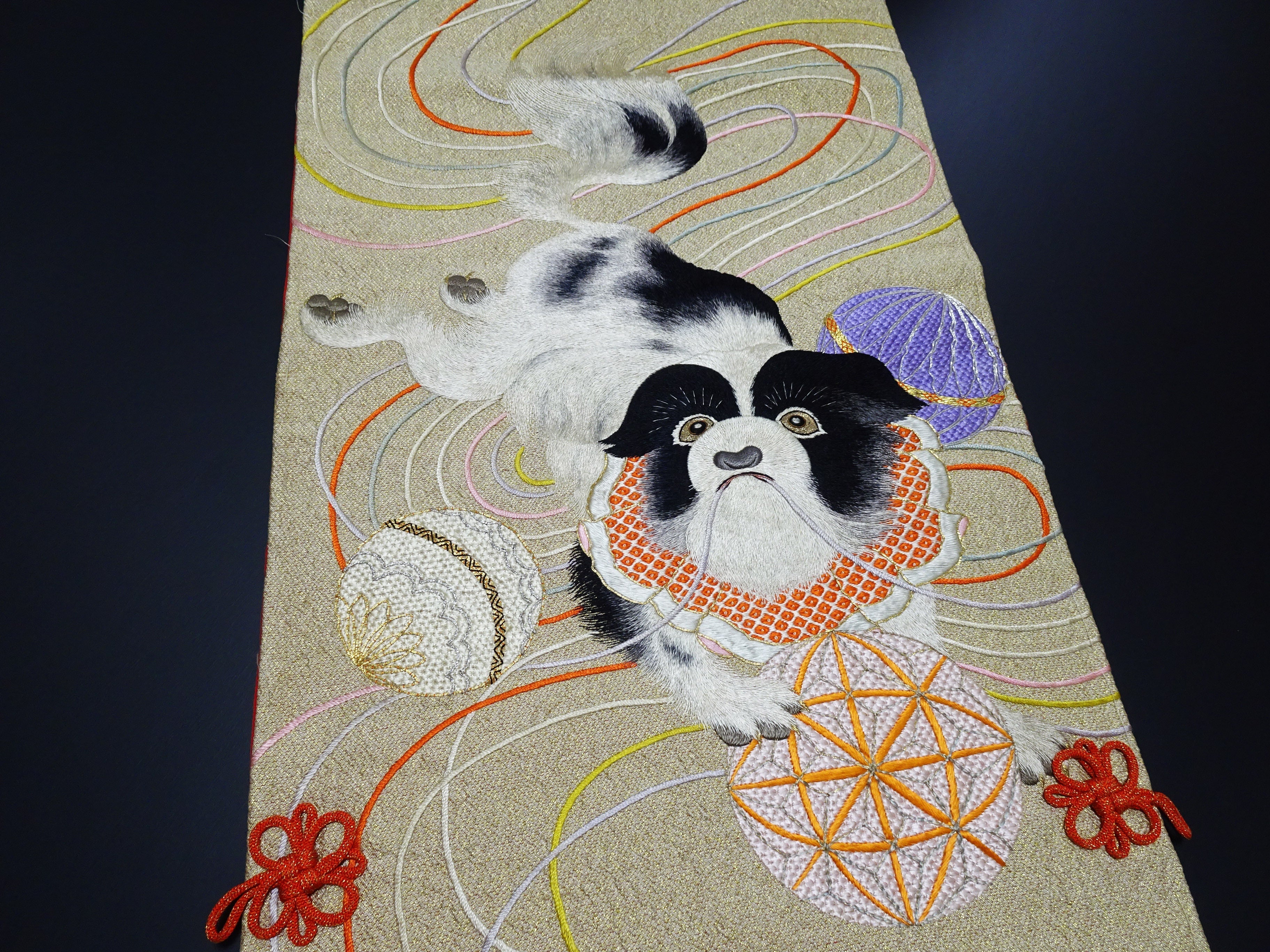
You can watch a video of the embroidery shown in these images on the NHK website.
Watch more videos.
This English-language page introduces Kyo-Nui (Kyoto Embroidery), one of Japan's most distinguished traditional crafts. It explains the history of Kyo-Nui, its unique hand-embroidery techniques, the materials used, and the exceptional skills of Kyoto's master artisans. The page also explores the cultural significance of Kyoto embroidery and why it has been treasured for centuries. It is an excellent resource for anyone who would like to learn more about this beautiful traditional art.
Read more: KOGEI JAPAN – Kyo-Nui (Kyoto Embroidery)
Takeyamachi Embroidery (Takeyamachi Shishu)
Takeyamachi Embroidery (Takeyamachi Shishu) is a traditional style of Japanese embroidery that developed in the Takeyamachi district of Kyoto. It is regarded as one of the representative schools of Kyoto embroidery (Kyo-Nui) and has long been used to decorate the finest kimono, obi, temple textiles, and ceremonial garments.
Takeyamachi Embroidery is especially admired for its bold yet refined use of gold and silver leaf threads, combined with exceptionally delicate silk embroidery. Master artisans skillfully blend satin stitching, couching techniques, and intricate hand embroidery to create rich textures and striking three-dimensional effects. Traditional motifs such as flowers, birds, seasonal landscapes, and auspicious designs are commonly featured.
Every piece is embroidered entirely by hand using techniques that have been passed down through generations. Because of the extraordinary level of craftsmanship required, authentic Takeyamachi Embroidery is extremely rare today and is highly valued by collectors, textile artists, and enthusiasts of traditional Japanese craftsmanship.
Takeyamachi Embroidery represents the elegance, technical excellence, and artistic heritage of Kyoto's finest embroidery tradition.

Kaga-Nui (Kaga Embroidery)
Kaga-Nui (Kaga Embroidery) is one of Japan's most celebrated traditional embroidery arts, originating in Kanazawa, Ishikawa Prefecture. It flourished during the Edo period under the patronage of the powerful Maeda clan, whose support helped develop Kanazawa into one of Japan's leading centers of arts and crafts.
Kaga-Nui is renowned for its refined elegance, delicate hand stitching, and realistic expression. Unlike the brilliant use of gold found in Kyoto embroidery, Kaga-Nui often emphasizes the natural beauty of silk threads, creating subtle shading, depth, and lifelike textures. Flowers, birds, seasonal landscapes, and other motifs inspired by nature are common subjects.
Every piece is embroidered entirely by hand using traditional techniques that have been passed down through generations. Master artisans carefully combine various stitching methods to produce rich textures, graceful curves, and remarkable three-dimensional effects.
Today, authentic Kaga-Nui remains a highly respected traditional craft. Because each work requires exceptional skill and many hours of meticulous hand embroidery, genuine Kaga embroidery is rare and highly prized by collectors, kimono enthusiasts, and textile artists throughout the world.

Watch the video.
We will continue to expand this page by adding information on other traditional Japanese embroidery styles, including Edo Embroidery, Sagara Embroidery, Suga Embroidery, and Koma Embroidery. Please check back as we regularly update our content with new articles and resources.